Pull up five different sources for the Davenport, Florida median home price this month and you'll get five different answers. One tracker puts the June 2026 median sale price at $316,000, up just over 1 percent from a year earlier, with homes taking about 49 days to go under contract. Another shows the average home value sitting at $341,159 as of late May 2026, down 4.5 percent over the past year. A third, pulling from active MLS listings in mid-August 2026, lists a median asking price near $462,000, up close to 17 percent year over year. A fourth, also working from mid-August 2026 MLS data, puts the median list price at $389,900. A fifth, also drawing on August 2026 MLS data, lands at $382,995 for the median sale price.
That's not measurement error. It's not one tracker being sloppy and another being careful. It's what happens when a single zip code contains two housing markets that behave nothing alike, and every portal blends them into one number before handing it to you.
Two Davenports, One Zip Code
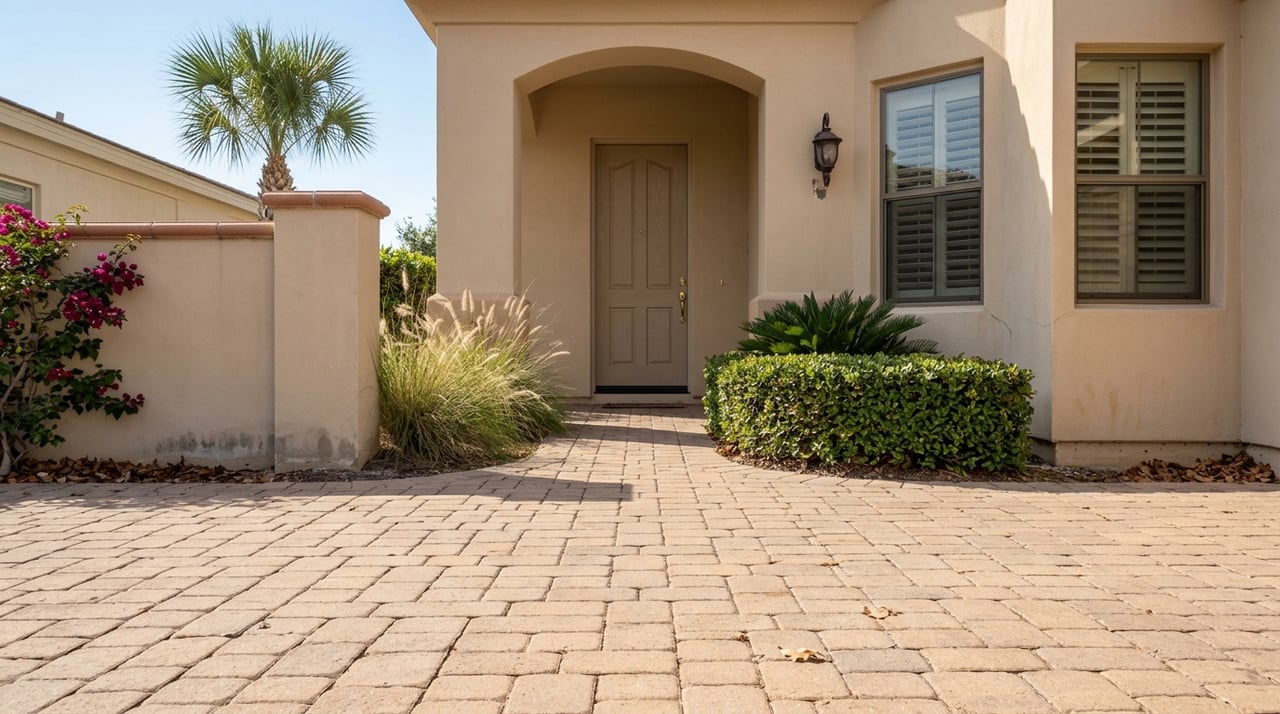
The first Davenport is the one most buyers picture: modest single-family homes, no HOA or a light one, owner-occupants who cut the grass on Saturday and know their neighbors. The second Davenport is a cluster of resort-style, HOA- and CDD-governed communities built specifically for short-term vacation rentals, often 8 to 10 bedroom "mega homes" with private pools, lazy rivers, and clubhouses, aimed at investors serving the Orlando tourism corridor 15 minutes east.
Both show up under the same "Davenport, FL" search. Both get folded into the same median. And they price completely differently, because they're not competing for the same buyer. A traditional Davenport home is priced against what a family can afford to live in. A resort-zoned home is priced against what it can earn per week on a booking calendar, which is a different math problem entirely.
That split is the real reason the numbers scatter the way they do. One tracker's sample might lean heavier on new resort construction with premium list prices attached to rental income projections. Another might be weighted toward closed sales in older, traditional subdivisions. Neither is wrong. They're measuring different things and calling it the same market.
The Triple Fee Stack Hiding Behind the List Price
Here's where it gets expensive for a buyer who doesn't know which Davenport they're standing in. A resort-community home in a place like Solterra can list for a price that looks completely reasonable next to a traditional single-family home nearby. What the list price doesn't show is the fee structure sitting underneath it.
Resort communities in this market typically layer three separate charges. There's the HOA dues, often $100 to $300 a month in a standard community but frequently higher in an amenity-heavy resort. There's the CDD, or Community Development District assessment, which funds the roads, sewers, and the long-term bond used to build the water parks and shared infrastructure. And there's a separate mandatory club fee, often $300 or more a month, that pays for the "lifestyle" amenities like towel service and pool staff, distinct from the HOA and not covered by it.
The CDD piece is the one that catches people off guard, because it usually shows up on the annual property tax bill rather than the monthly mortgage estimate a buyer sees during a showing. A buyer running the numbers off a listing sheet can easily miss it, then get surprised at closing or, worse, after moving in when the first tax bill arrives. Add the CDD assessment to the HOA dues and the club fee, and a home that looked hundreds of dollars a month cheaper than a traditional Davenport house can end up costing more once all three are counted.
What Happens When the Developer Leaves the Room
There's a second layer to this that matters even more for anyone planning to hold the property for years rather than flip it quickly. In newer resort developments, the developer typically controls the HOA board until enough homes have sold. During that phase, the developer can subsidize dues to keep them artificially low, both to make the community more attractive to early buyers and to smooth the sales pitch on projected rental income. Newer developments like Windsor Cay are a documented example of this pattern.
Once the developer exits and hands control to the homeowners, that subsidy goes away and the association has to cover the real cost of running the amenities on its own. Buyers in these communities are commonly advised to expect fee increases in the range of 30 to 40 percent after that turnover happens. That's not a maintenance bump. That's the training-wheels fee coming off.
If you're comparing a resort-community listing's current HOA statement to a traditional neighborhood's steady, long-established dues, you're not comparing two stable numbers. You're comparing one number that's already settled against one that's still artificially low and scheduled to jump.
A Neighborhood's Rules Can Change Under You
Community character in this segment isn't fixed at the moment you buy, either. Loma Linda, a Davenport-area community, was widely known years ago as a short-term-rental-friendly neighborhood, the kind of place investors specifically sought out. Over time, the community shifted toward residential-only use. Existing owners at the time were generally grandfathered in, but new buyers were restricted from operating short-term rentals going forward.
That shift didn't happen overnight, and it wasn't unique to this one community. It's a reminder that an HOA's rental policy today is not a permanent feature of the property. If your plan depends on short-term rental income, the CC&Rs you review before closing tell you today's rules, not next year's.
The County Line Nobody Mentions on the Listing
There's one more wrinkle that explains part of the price confusion, and it has nothing to do with HOA math. Some of the resort communities that show up under "Davenport" listings, ChampionsGate among them, actually sit just north of the city, mostly in unincorporated Osceola County rather than Polk County, where the city of Davenport itself is located. Solterra, by contrast, falls under the City of Davenport's oversight on the Polk County side, with the city monitoring listings and the county handling zoning and nuisance complaints.
That matters beyond geography trivia, because Osceola and Polk don't regulate short-term rentals identically, and the tax obligations differ depending on which county actually taxes the parcel. In Polk County, short-term rentals carry a combined tax burden of 6 percent state sales tax plus a 5 percent county tourist development tax, for a total of 11 percent on the rental amount. Every operator also needs a Florida DBPR vacation rental license, which carries a $50 processing fee plus a per-unit license fee and requires annual renewal, and that license doesn't transfer to a new owner at sale. A buyer evaluating two nearly identical resort listings, one on each side of the county line, could be looking at different tax remittance rules and different local enforcement patterns depending on which government actually has jurisdiction over that address.
So when five sites report five different Davenport medians, part of what's happening is that "Davenport" as a search term pulls inventory from more than one taxing and regulatory jurisdiction, mixed in with more than one type of housing product, and reported by trackers using different date ranges and sampling methods. None of that is dishonest. It's just not one market.
So Which Davenport Should You Buy?
The fix isn't finding the one true median. It's figuring out which Davenport a specific listing belongs to before you anchor on its price.
If you're buying a primary residence, the traditional-neighborhood numbers are your real comparison set, and the resort-community listings with their club dues and CDD assessments aren't a relevant benchmark even if they show up in the same search results. If you're buying for short-term rental income, the resort-community fee structure is the actual cost of doing business, and you need the current HOA budget, the CDD assessment amount, the club fee schedule, and a written answer on which side of the Polk-Osceola line the parcel sits before you can price the investment honestly.
Either way, ask for the CC&Rs, the current HOA budget and reserve study, and recent board meeting minutes before writing an offer. If the community's rental policy has changed once, as it did in Loma Linda, you want to know how it's been handled and where the association's priorities seem to be heading. We've put together a longer breakdown of how Davenport HOAs work, what governs them under Florida law, and what to ask for before you make an offer, which is worth a read if you're looking at anything HOA-governed in this market.
A Few Common Questions
Is Davenport a buyer's or seller's market right now? MLS data updated August 20, 2026 shows roughly 8 months of housing supply in Davenport, which sits above the typical balanced range of 3 to 6 months. That points to more room for buyers to negotiate than in a tight seller's market, though conditions vary sharply between the traditional and resort segments described above.
What exactly is a CDD fee, and is it the same as HOA dues? No. A Community Development District assessment is a separate charge, often billed annually on the property tax bill, that funds infrastructure like roads, sewers, and amenity construction bonds. HOA dues are a separate, usually monthly or quarterly charge for day-to-day community management. A resort-community buyer should expect to see both, plus a club fee in many cases.
Do all Davenport HOAs restrict short-term rentals? No, and the reverse is also true. Some communities actively support short-term rentals, others prohibit them outright, and some have shifted their stance over time, as Loma Linda did. The only reliable answer for a specific property is the current CC&Rs and a direct written confirmation from the HOA.
How do I find out if a listing is in Polk or Osceola County? Ask your agent to pull the parcel record before you get attached to the home. The taxing authority and the applicable short-term rental rules follow the county line, not the "Davenport" name on the listing.
If you're trying to figure out which Davenport actually fits your plans, whether that's a quiet street to raise a family on or a rental property that pencils out after every fee is counted, Craig Burke Real Estate Group can walk the HOA documents, the tax bill, and the county line with you before you write an offer. Talk with Craig and get a clear read on the numbers that actually apply to your situation.