Wondering whether a single-family home or a townhome makes more sense in Lakeland? You are not alone. If you are trying to balance budget, upkeep, privacy, and location, the choice can feel bigger than it looks at first glance. The good news is that Lakeland offers both options in meaningful ways, and understanding the tradeoffs can help you move forward with confidence. Let’s dive in.
Why this choice matters in Lakeland
Lakeland’s growth pattern helps explain why this comparison matters. City planning documents emphasize compact, walkable development, infill redevelopment, and mixed-use growth in core areas like Downtown CRA, Midtown CRA, and Dixieland CRA. That means attached housing, including townhomes, can be a natural fit in some parts of the city, while detached homes continue to make up a much larger share of the overall housing supply.
A recent listing snapshot shows that difference clearly. Lakeland had 36 townhome listings compared with 1,032 single-family listings. So while townhomes are part of the local market, detached homes still offer far more choices if you want the broadest selection.
What counts as a townhome in Florida
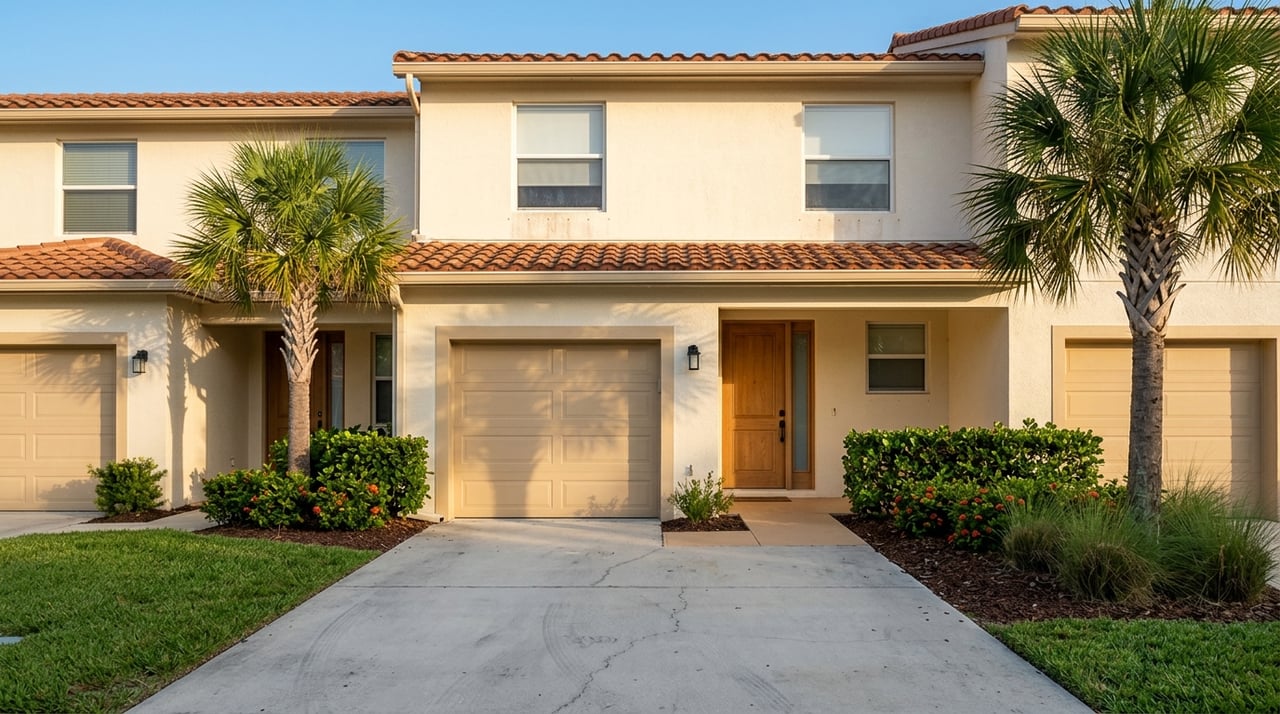
In Florida, a townhouse is defined as a single-family dwelling unit of no more than three stories that is built in a series or group of attached units, with property lines separating the units. In simple terms, that means you may own your individual unit and lot, but your home is attached to neighboring homes.
For you as a buyer, that usually translates to a different day-to-day feel. A townhome often offers a more compact layout, closer spacing, and more shared community features than a detached house. A single-family home, by comparison, typically gives you more separation from neighbors and more control over your outdoor space.
Maintenance is one of the biggest differences
If you want the short version, single-family homes usually mean more direct maintenance responsibility, while townhomes may shift some of that responsibility to an association. The key word is may. In Lakeland, the details depend on the specific community and its governing documents.
For single-family homes, the owner generally carries the full maintenance load. The City of Lakeland’s homeowner resources point owners toward maintenance guidance, and city rehabilitation assistance is limited to owner-occupied single-family homes. That supports the practical reality that you are usually responsible for the structure, systems, and exterior upkeep.
Townhomes work differently. Under Florida HOA law, owners and associations must follow the recorded governing documents, and assessments are based on those documents. In one recent Lakeland townhome approval, the HOA or similar entity was assigned maintenance for open space, common areas, amenities, fences, walls, landscape buffers, and stormwater retention areas.
That does not mean every Lakeland townhome community covers the same items. Some communities may include more exterior maintenance than others. If a townhome is set up in condo form, Florida condo law generally places responsibility for common elements on the association unless the declaration says otherwise.
What to ask about maintenance
Before you choose either property type, ask these questions:
- What does the monthly fee cover?
- Is exterior maintenance included?
- Who maintains the roof, landscaping, and shared areas?
- Are there rules for patios, fences, or exterior changes?
- Are there separate assessments beyond the regular monthly fee?
This is where careful review matters. Two townhome communities with similar prices can offer very different levels of maintenance coverage.
Privacy and outdoor space
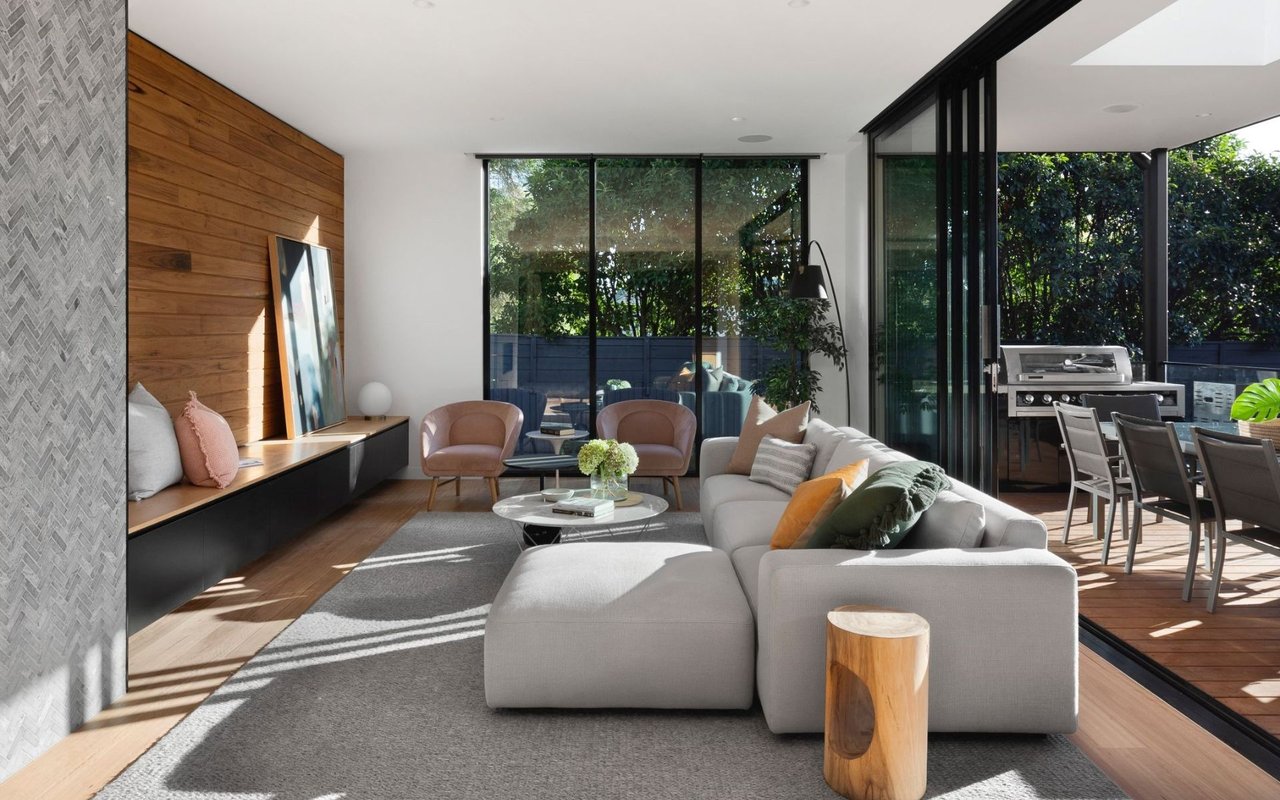
Your lifestyle should play a big role in this decision. If you picture a larger backyard, room for future outdoor projects, or more distance from neighbors, a single-family home will usually line up better with that goal.
Recent Lakeland townhome standards at Kathleen Road and Sleepy Hill Road help show the physical difference. Those standards include a 20-foot minimum lot width, 1,700 square feet minimum lot area, 15-foot rear setbacks, one-car front-loaded garages, and two-story units. In practical terms, that points to a smaller private outdoor footprint than what you will often find with detached homes.
Current Lakeland townhome listings also reflect that pattern. Examples include communities with HOA fees of $184 and $216 per month, with features such as garages, pools, clubhouse access, fitness centers, gated access, lake access, and private patios. What you gain in shared amenities, you may give up in yard size.
Single-family homes tend to be the better fit if you want more flexibility for exterior improvements. In Lakeland, fences do not currently require permits, but they still must meet Land Development Code standards, and homes in historic districts need a Certificate of Review. If you are thinking about a fence, shed, pool, or deck, that extra exterior control can matter.
Budget goes beyond the sales price
It is easy to compare list prices and stop there, but your monthly cost matters just as much. Townhomes often come with a monthly HOA payment, and that fee may support shared amenities or maintenance. Single-family homes may also have HOAs, but many detached home listings describe lower HOA costs or no obvious shared-amenity structure.
Based on the current snapshot in the research, Lakeland townhomes are mostly priced from about $184,999 to $276,900 and range from around 1,302 to 1,844 square feet. Current single-family examples range from a 1,120-square-foot house at $200,000 to homes over 5,000 square feet, with luxury properties priced above $1 million.
That wider range is important. If you want a narrower band of pricing and a more compact footprint, a townhome may be easier to compare. If you want more options across size, lot type, and budget, single-family homes give you more variety.
Monthly cost comparison points
When comparing options, look at:
- Mortgage payment
- Property taxes
- HOA dues, if any
- Insurance costs
- Expected maintenance and repair costs
- Utility use tied to home size
Lakeland buyers may also want to ask about local assistance programs. The City of Lakeland’s Home Purchase Assistance Program can provide up to $40,000 toward down payment and closing costs for eligible homes inside city limits. Polk County also administers homestead exemption for primary residences.
Where you are more likely to find each option
Townhomes and single-family homes are not spread evenly across Lakeland. The city’s planning strategy encourages more density and mixed-use development in central areas, especially downtown and Midtown. Recent Midtown CRA feedback specifically called for townhomes and more homes for sale on vacant lots along major and neighborhood corridors.
A recent townhome approval was located at Kathleen Road and Sleepy Hill Road, and current townhome inventory clusters in ZIP codes like 33801, 33803, 33805, 33809, 33810, and 33811. Single-family homes appear across a wider footprint, including 33801, 33803, 33805, 33810, 33811, 33812, and 33813.
That broader spread gives detached-home buyers more choices in setting and lot style. Lakeland’s neighborhood pages show a range of single-family patterns, from homes near Lake Parker in Lakeshore to mixed housing sizes in Cleveland Heights, older homes near downtown in Historic Lake Hunter Terrace, and modest residential homes in Shore Acres.
Which choice fits your lifestyle?
There is no one-size-fits-all answer here. The better choice depends on how you want to live every day.
A townhome may fit you if you want:
- Lower day-to-day exterior upkeep
- More predictable shared-maintenance costs
- Access to community amenities
- A more compact home design
- A location that may be closer to central Lakeland growth areas
A single-family home may fit you if you want:
- More privacy from neighbors
- More control over the exterior
- More usable yard space
- More flexibility for fences, pools, sheds, or outdoor living
- A wider range of home sizes and locations
A practical way to decide
If you are still on the fence, try narrowing your search around your daily priorities instead of property labels alone. Ask yourself what would bother you more: mowing and exterior repairs, or limited yard space and closer neighbors. That one question often helps clarify the best fit.
It also helps to compare actual Lakeland listings side by side. Looking at one townhome community and one or two single-family options in the same price range can quickly show how square footage, HOA costs, lot size, and location affect your decision.
When you are ready to sort through the options in Lakeland, Craig Burke Real Estate Group can help you compare homes with a local, practical lens so you can choose the property type that truly fits your goals.
FAQs
What is the difference between a townhome and a single-family home in Lakeland?
- In Lakeland, a townhome is usually an attached home with its own unit and smaller outdoor footprint, while a single-family home is detached and typically offers more yard space, privacy, and exterior control.
Are townhomes in Lakeland cheaper than single-family homes?
- Lakeland townhomes in the current snapshot were mostly listed from about $184,999 to $276,900, while single-family homes ranged from around $200,000 to over $1 million, so townhomes often sit in a narrower and generally lower price range.
Do Lakeland townhomes always include exterior maintenance?
- No. Maintenance coverage depends on the community’s governing documents, and the monthly fee may cover very different items from one townhome community to another.
Are HOA fees common for townhomes in Lakeland?
- Yes. Current Lakeland townhome listings in the research showed HOA examples of $184 and $216 per month, often tied to shared amenities or maintenance responsibilities.
Is a single-family home better for outdoor projects in Lakeland?
- In many cases, yes. If you want more room or flexibility for features like fences, pools, decks, or sheds, a single-family home will usually give you more options, subject to local code requirements.
Where are townhomes commonly found in Lakeland?
- Current townhome inventory in Lakeland clusters in ZIP codes including 33801, 33803, 33805, 33809, 33810, and 33811, with city planning also supporting more compact growth in central areas like downtown and Midtown.