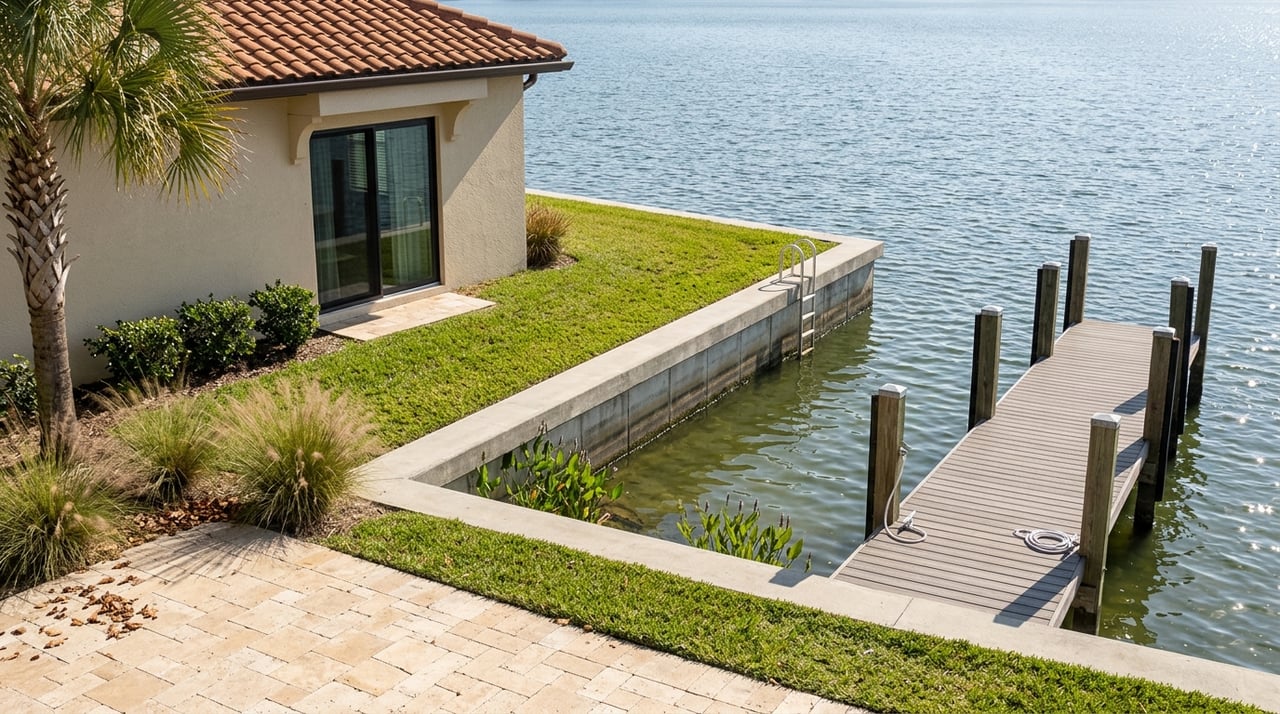
If you picture a waterfront home in Winter Haven as nothing but sunsets and boat days, you are only seeing part of the story. In a city known for its lakes, the shoreline, dock, flood zone, and permit history can affect your costs and your options just as much as the home itself. If you are thinking about buying on the water, this guide will help you focus on what matters before you close. Let’s dive in.
Winter Haven waterfront starts with the lake
Winter Haven is known as the Chain of Lakes City, with 50 lakes within or bordering city limits. According to the city, 8 lakes make up the North Chain and 14 make up the South Chain, plus 13 more public lakes are hydrologically connected but not connected for navigation.
That matters because not every waterfront property offers the same experience. Two homes may both be listed as lakefront, but they can differ in boating access, shoreline setup, maintenance needs, and future improvement options. When you shop in Winter Haven, it helps to treat the specific lake and lot as part of the property itself.
Shoreline type affects ownership
One of the first things to identify at a showing is the type of shoreline. In Winter Haven, a waterfront lot may have a natural vegetated edge, a modified beach-style edge, a hardened seawall, or a dock-and-lift setup.
The City of Winter Haven says lakeshore vegetation helps maintain lake ecosystem stability. The city generally allows clearing up to 50 feet or 50% of owned shoreline to open water without a permit, but exceptions apply, so this should be verified for the specific parcel.
If a shoreline has been altered with sand fill or beach-style changes, that can be a bigger issue. The city says fabricated sandy shorelines can harm lake health and usually require both a Florida Department of Environmental Protection dredge-and-fill permit and an environmental resource permit from the water management district.
What to look for at a showing
As you walk a property, look beyond the view. Focus on what is physically there and whether it appears original, modified, or recently repaired.
Ask questions like:
- Is the frontage natural, hardened, or filled?
- Has any shoreline clearing been done?
- Was sand added to create a beach area?
- Are there visible signs of erosion, patchwork, or settling?
- Is the shoreline setup likely to need future work?
A natural shoreline can have lower upfront improvement costs, but it may limit what you can change later. A seawall can help reduce erosion exposure, but it also creates inspection, repair, and replacement responsibilities over time.
Docks and seawalls need document review
With waterfront property, the showing is only the start. A big part of your due diligence is confirming that any dock, lift, seawall, or shoreline work was properly permitted and completed.
Florida DEP says some single-family docks can be self-certified as exempt. In certain situations outside Outstanding Florida Waters and in canals, exempt docks can be up to 1,000 square feet of over-water area. General permits can allow up to 2,000 square feet and are designed for no more than two vessels, while larger or more complex projects may need an individual environmental resource permit.
DEP also notes that roofs, canopies, elevated platforms, and decking count toward the over-water area calculation. In other words, a dock that looks modest at first glance may still trigger more permit review than you expect.
Winter Haven’s building permit resources also point buyers and owners to dock requirements. The city notes that flood hazard maps are on file with Engineering Services, and an elevation certificate is required with the building permit application for a home in the floodplain.
Questions to ask about a dock or seawall
Before closing, ask the seller or listing side for:
- Dock or seawall permits
- Final inspection records
- A recent survey showing the shoreline structures in relation to the lot
- Records of repairs, replacement, or expansion
- Details on any shoreline fill or sand changes
This paper trail matters. On waterfront homes, permit review is often just as important as the inspection report.
Flood risk is property-specific
Flood risk is one of the most important parts of buying a waterfront home in Winter Haven. Even homes on the same lake can have very different flood insurance costs and floodplain conditions.
FEMA says flood insurance is separate from homeowners insurance, and most homeowners policies do not cover flood damage. Homes in high-risk flood areas with government-backed mortgages are generally required to carry flood insurance.
FEMA also says Risk Rating 2.0 is property-specific. Premiums can vary based on factors like flood zone, elevation, building characteristics, distance to flooding sources, and replacement cost. That means you should not assume your future premium based on a nearby home or a general estimate.
Winter Haven’s floodplain guidance says buyers and applicants should determine whether a parcel is in the Special Flood Hazard Area by using the FEMA Map Service Center or by checking with the city floodplain administrator. The city also says an elevation certificate prepared by a Florida-licensed surveyor should be attached with a building permit application for a home in the floodplain, and a topographic survey may help if the lot is near the flood boundary.
Flood questions worth asking early
Flood questions are best handled before you get too far into the deal. That gives you time to understand insurance costs and whether more documentation may be needed.
Ask for:
- The current flood zone for the lot
- A recent elevation certificate, if available
- Any prior survey used for a map change request
- A flood insurance quote for the exact address
- Information on whether additions or improvements sit in the flood hazard area
If the lot is close to a mapped boundary, the city notes that survey data may help support a FEMA map change request and potentially reduce premiums. The Southwest Florida Water Management District floodplain viewer may help with early planning, but the district says it is not the official FEMA map used for insurance decisions.
Boating access is not the same on every lake
A waterfront address does not automatically mean the same boating lifestyle everywhere in Winter Haven. Some buyers want room for a larger boat. Others care more about simple launch access, calmer water, or fewer restrictions.
Before you buy, look at the actual lake conditions and posted markers. Winter Haven’s Police Department says its Marine Unit focuses on boater education and boating enforcement on the city lakes, and FWC notes that local boating-restricted areas are established by rule and marked on the water.
If boating is part of your plan, confirm that the dock setup matches how you expect to use the property. A dock sized for one vessel may not fit your needs if you plan to keep a different boat or more than one watercraft.
Basic boating rules to know
FWC says anyone born on or after January 1, 1988 who operates a vessel powered by 10 horsepower or more must pass an approved boater safety course and carry the boating safety education card.
FWC also says recreational vessels must have:
- A wearable life jacket for each person
- A throwable Type IV PFD on boats 16 feet and longer
- A marine fire extinguisher on boats with built-in fuel tanks or enclosed compartments
- A sound-producing device
- Required lighting
Children under 6 have an added life jacket requirement while underway. These rules do not decide whether a home is right for you, but they are part of the real cost and responsibility of owning on the water.
Budget for more than the mortgage
One of the biggest mistakes waterfront buyers make is focusing only on the purchase price. In reality, a lakefront home can come with recurring costs that are easy to underestimate.
In addition to regular homeownership expenses, you may need to budget for flood insurance, dock upkeep, seawall inspections, vegetation control, permit-related costs, and future repairs. Even if the home looks well maintained, waterfront structures age differently than inland features.
Broad national cost guides included in the research help explain why this matters. HomeAdvisor’s 2025 dock guide puts the average dock build at $14,835, with a typical range of $3,981 to $25,690. HomeGuide’s seawall guide lists a 100-foot seawall average of $35,000, with a typical range of $15,000 to $60,000, plus inspection and repair costs that can add up over time.
These are not Winter Haven quotes, but they are a reminder that deferred maintenance on the shoreline can become expensive. A smart budget should account for what the water adds to the property, not just what the house itself needs.
A practical Winter Haven checklist
When you tour waterfront homes in Winter Haven, it helps to separate what you can see from what you need to verify in writing. That approach can help you avoid surprises after closing.
Use this checklist as a starting point:
- Identify the shoreline type: natural, modified, or hardened
- Ask for permit history on docks, seawalls, lifts, sand fill, and shoreline clearing
- Confirm the current flood zone
- Request an elevation certificate if one exists
- Ask whether any map-change documents were filed in the past
- Check whether the dock setup fits your intended boat use
- Look for posted boating restriction markers on the lake
- Ask when the seawall was last inspected
- Review any known repair or maintenance records
- Estimate annual carrying costs for insurance and waterfront upkeep
The goal is simple: make your decision based on documentation, not just curb appeal. On Winter Haven waterfront property, the records often tell you as much as the view.
A waterfront home can be a great fit if you go in with clear expectations and the right local guidance. If you want help evaluating lakefront homes in Winter Haven and the broader Polk County market, connect with Craig Burke Real Estate Group for practical, local support at every step.
FAQs
What should you check first when buying a waterfront home in Winter Haven?
- Start with the lake, shoreline type, dock or seawall setup, flood zone, and permit history for any waterfront improvements.
How important is shoreline type for a Winter Haven lakefront home?
- Shoreline type matters because it can affect maintenance costs, erosion exposure, and what changes may be allowed in the future.
Do docks and seawalls in Winter Haven need permits?
- Many docks, seawalls, and shoreline changes require review or permits, so you should ask for records, final inspections, and a recent survey before closing.
How do you verify flood risk for a Winter Haven waterfront property?
- Check the current FEMA flood zone, ask for an elevation certificate, and get a flood insurance quote for the exact address rather than relying on nearby properties.
Are all Winter Haven waterfront homes equal for boating access?
- No. Lake access, dock size, posted restrictions, and navigability can vary by property and by lake.
What extra costs come with owning a waterfront home in Winter Haven?
- Common added costs include flood insurance, dock maintenance, seawall inspections or repairs, vegetation control, and possible permit-related expenses.